


Natasha Kanapé Fontaine at Le Festif! de Baie-Saint-Paul
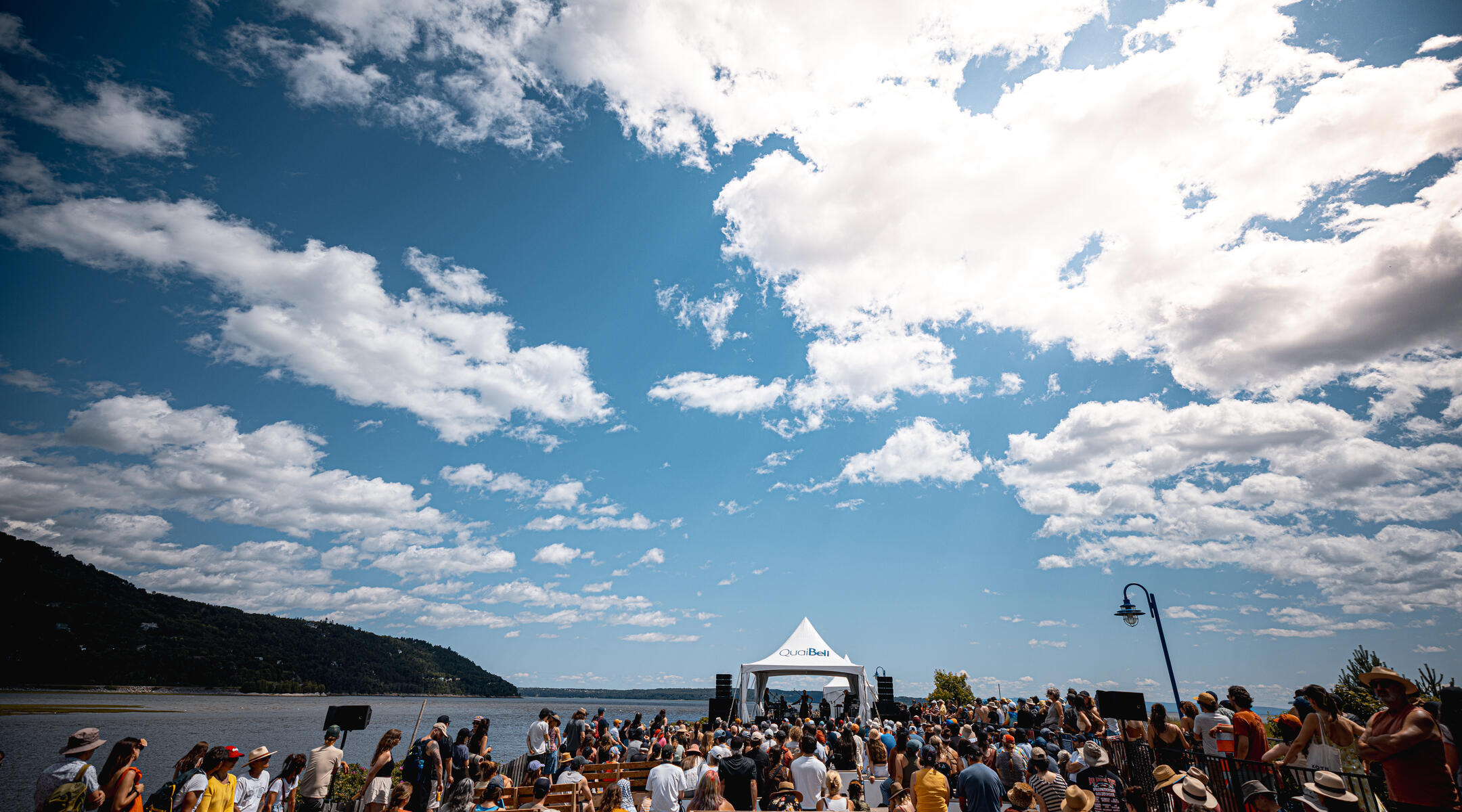
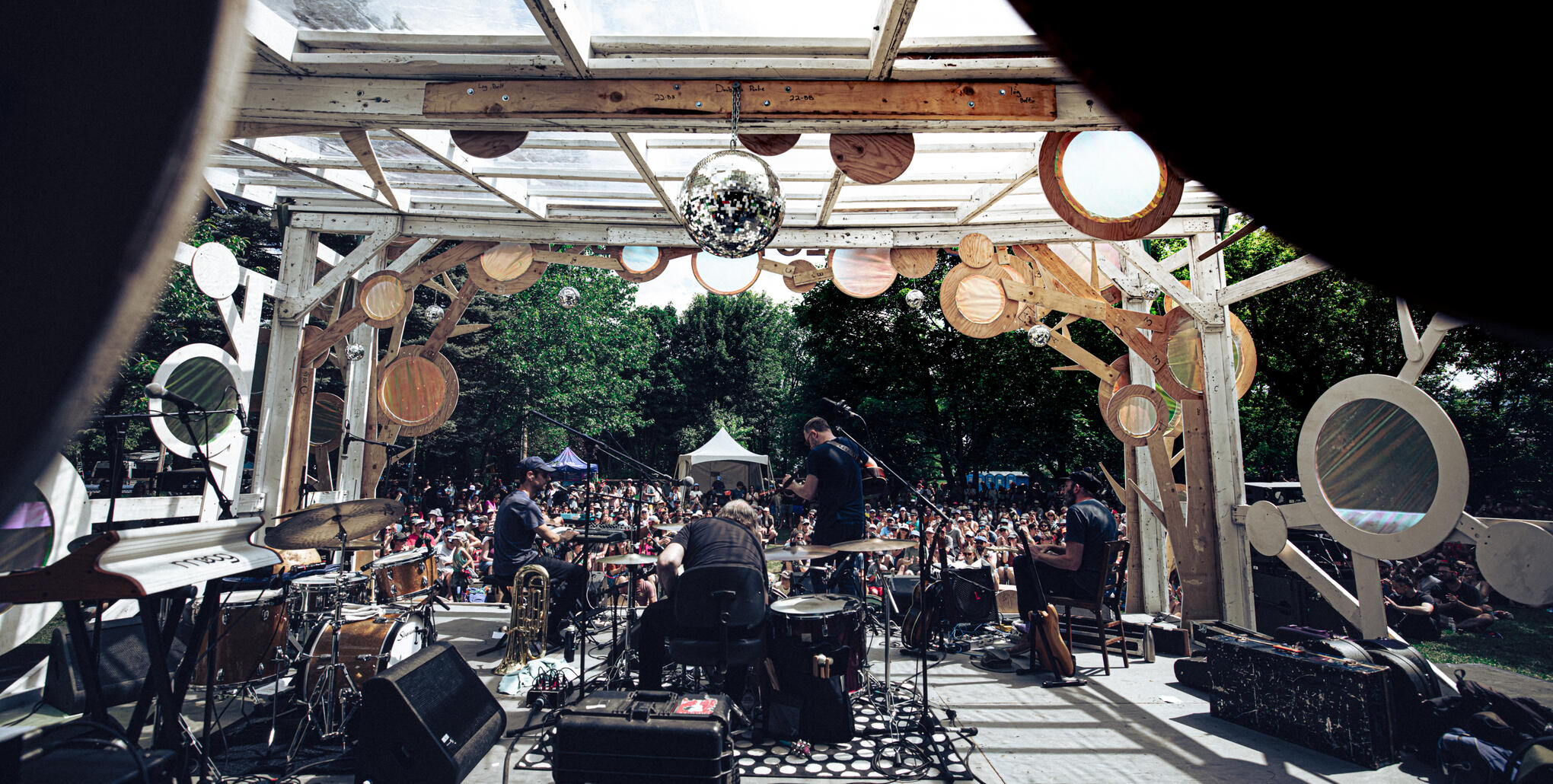
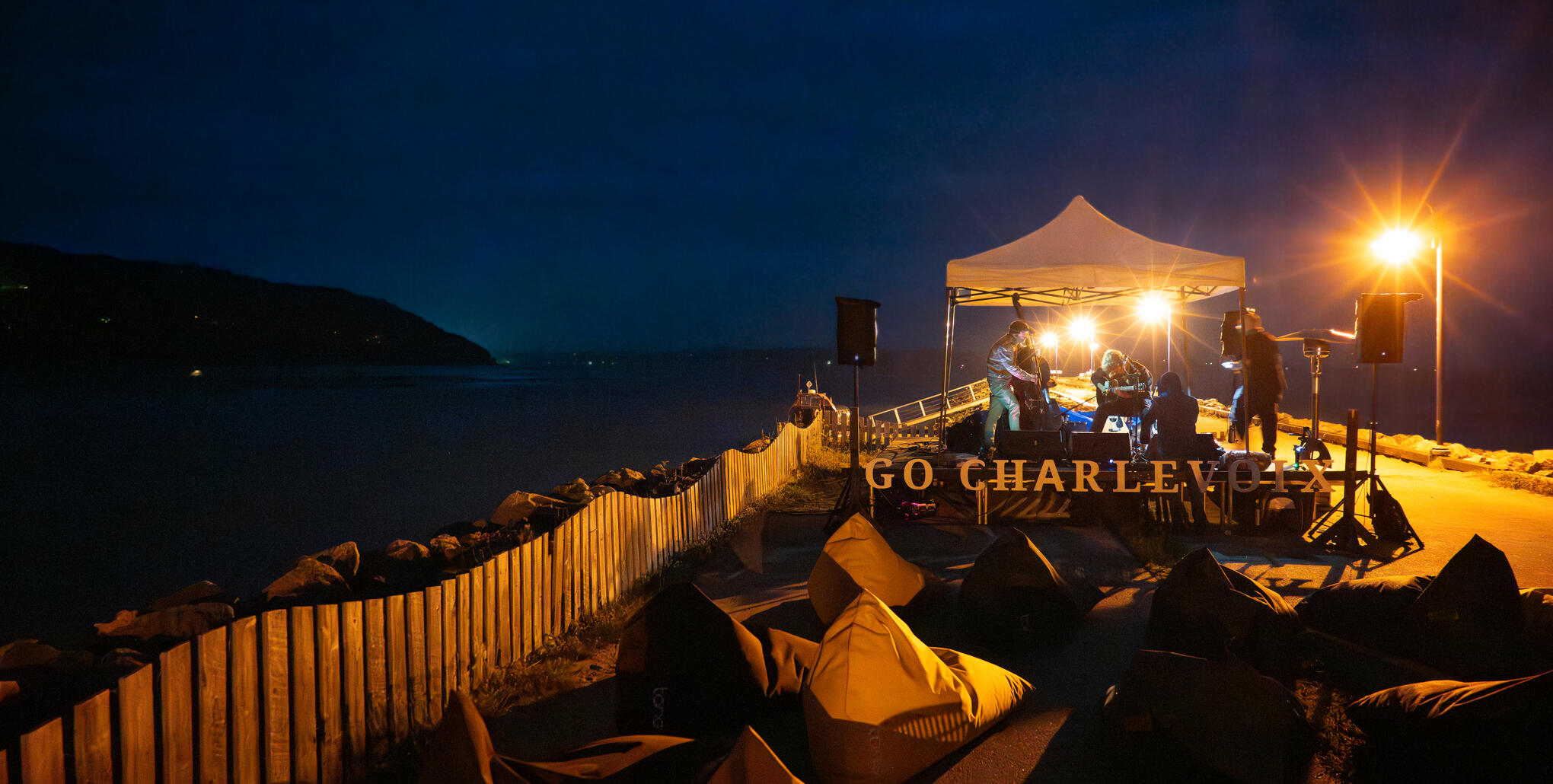
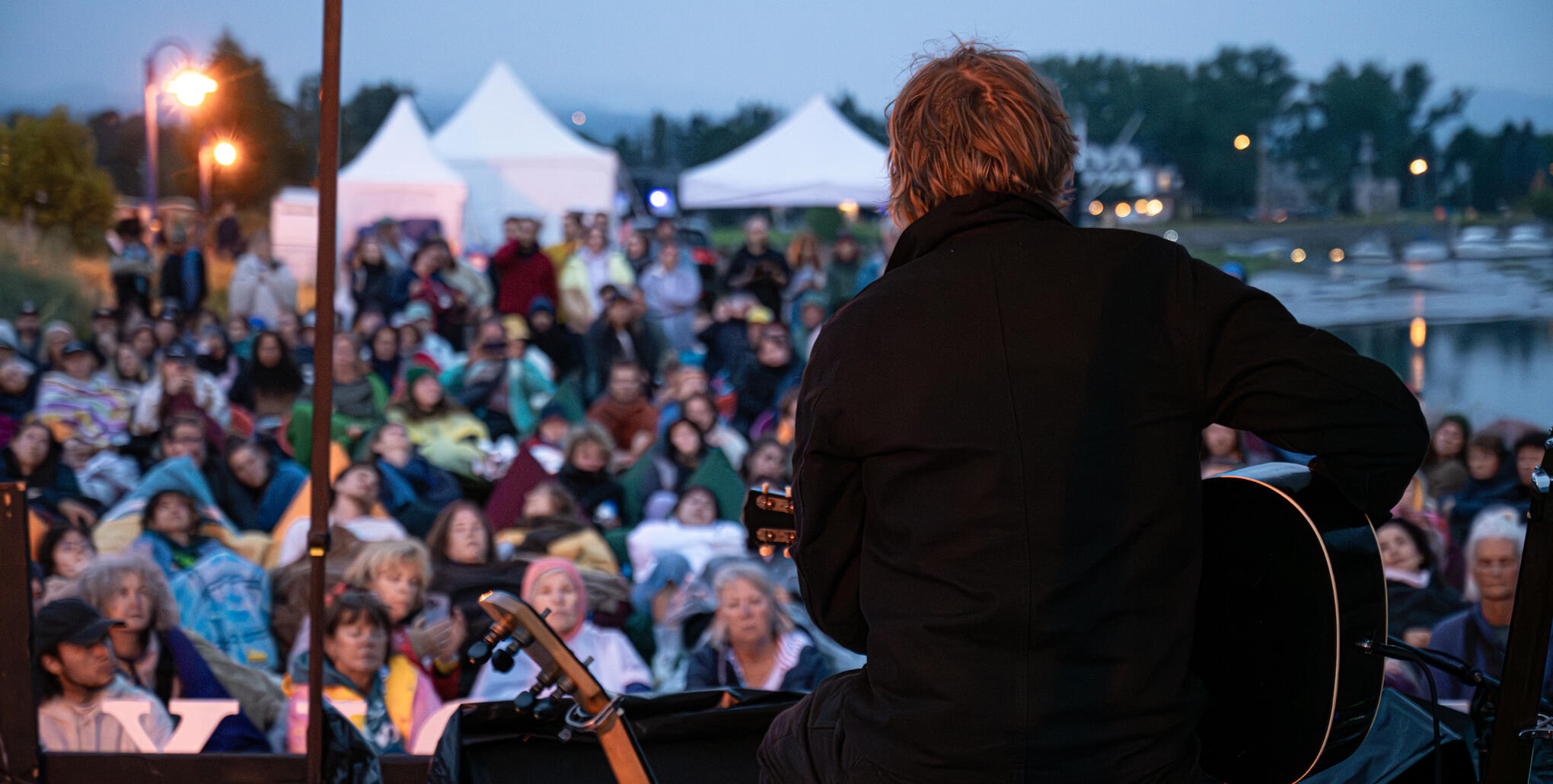
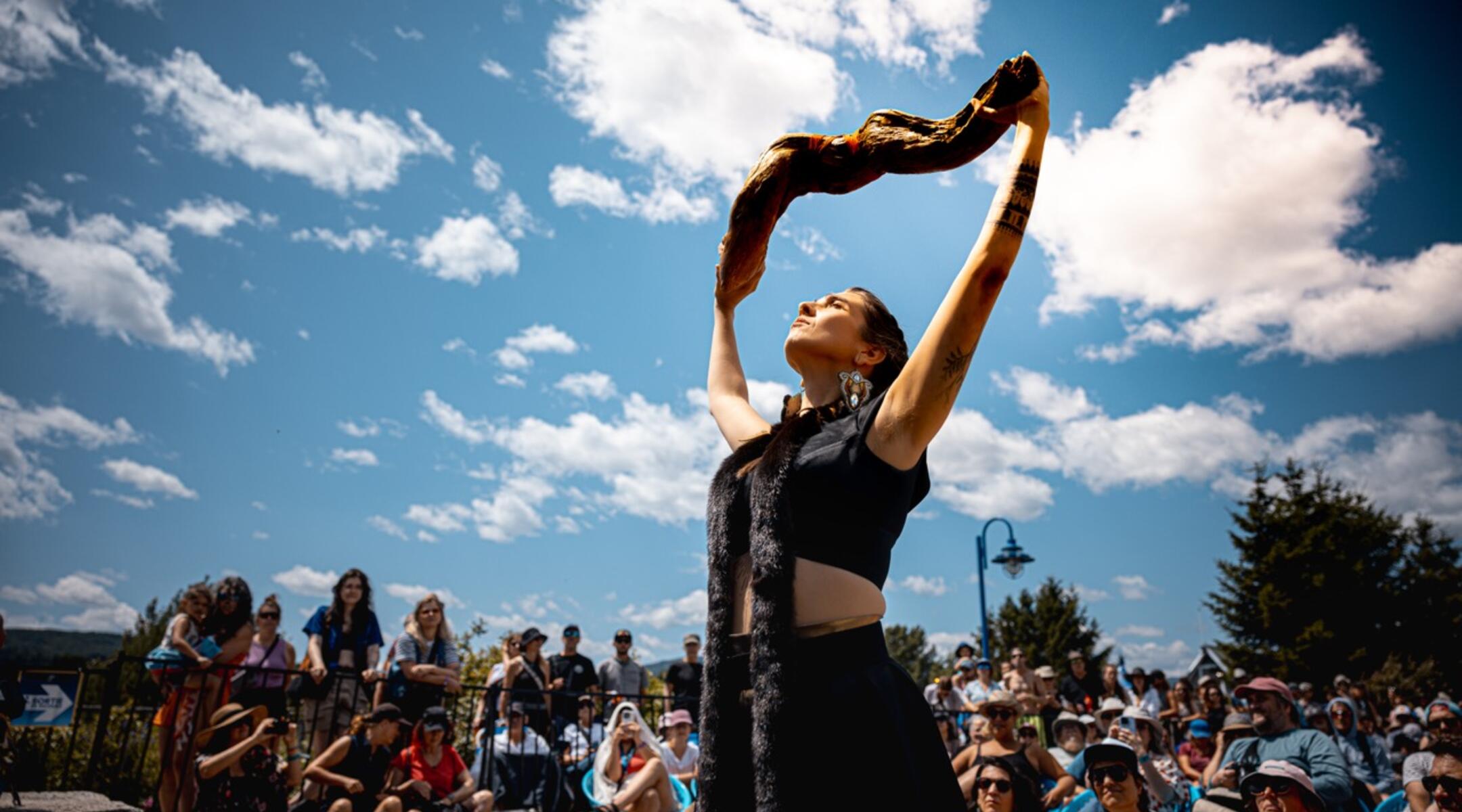
Lights up the pier with her Innu-Aimun slam poetry; GoCharlevoix & Le Festif! de Baie-Saint-Paul present Indigenous performer Natasha Kanapé Fontaine at the Concert à l’aube [Concert at Dawn].
Natasha
Kanapé
Fontaine
Le Festif! de Baie-Saint-Paul
Natasha, you’re a multidisciplinary artist (writer, poet, visual artist, actor). During a performance, your music also draws from each of these forms of expression. How would you describe the experience that people might have during the Concert à l’aube?
Well, I’m looking forward to figuring that out, too! [laughs] Truly, this will be my first experience of putting on a performance like this one. And it’ll be in the company of the audience at the Festif! concert. It’s an enormous honour to be able to celebrate poetry as the sun rises. In creating this performance, the first thing I wanted to do was provide the audience with the experience of poetry, as I experience it on a daily basis: meditative and inviting, while at the same time claiming community and claiming intimacy, reclaiming both one’s own body and one’s own people. It’s also the idea of standing up against everything that doesn’t make sense, to reclaim as human beings what should be an experience of the essence of humanity instead of an experience of sadness, of injustice, and of oppression. I hope that these pieces will draw us, as one, into an inner dance, and into a gaze turned towards the future. I’ve called the performance Nikan: dans cent ans [Nikan: In 100 Years], the idea being that we can’t forget that the future is ours to create, so it’s essential that we take action right now. Nikan means “ahead,” “future,” “at the forefront.”
You speak a lot about attachment to the land in your work. How do you approach this performance, on the banks of the St. Lawrence, outdoors, at dawn?
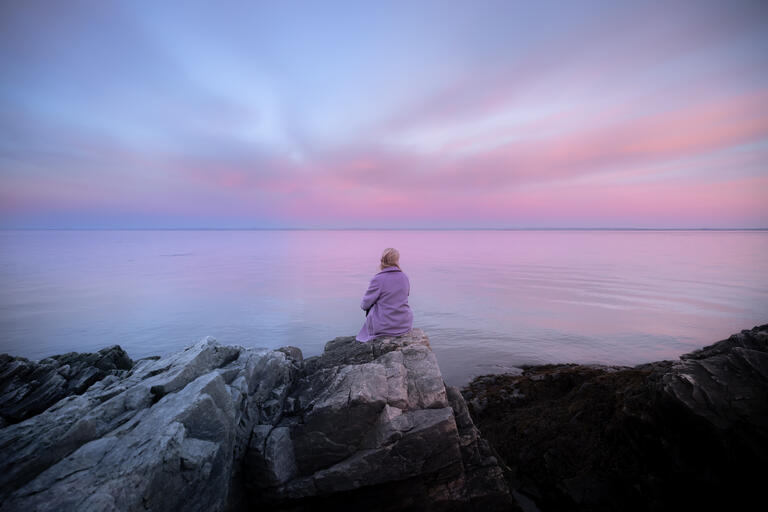
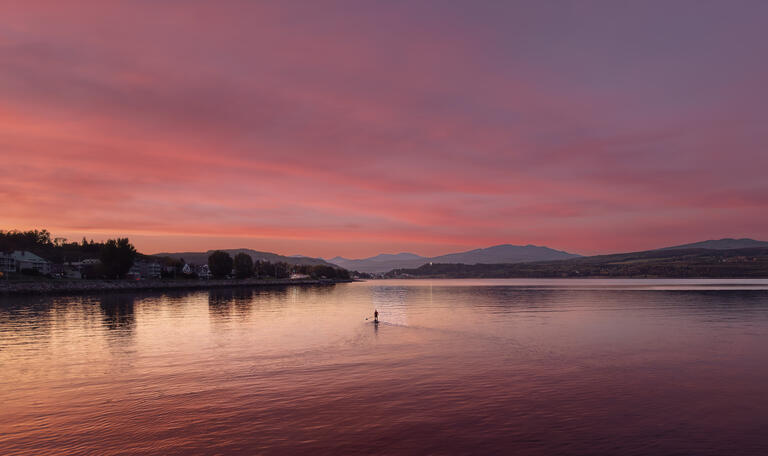
There are times when I miss the sunrise, so I go to bed early to make it easier to wake up before dawn and to watch the sun light up the whole horizon from my window. I’m from the North Shore, so it’s normal for me to experience the wide open spaces and to know those places, like the back of my hand. So, usually, experiencing a sunrise is a bit of a solitary thing for me. For once, I will recite poetry in front of a large audience; poems concerned with the state of the world but that still want to dig into the uncertainty to reveal the precious stones of wonder and light to be found there. I think I’ll tell my poems to the sun, so the audience can experience a kind of reconnection between us all. I see the sun as a human being: he burns, he breathes, he moves, he turns, he spits, he dances, he warms, he accepts everyone, and he comforts everyone. It will be like saying prayers to him, doing the oldest thing in the world. Take my prayers, Sun, burn them, and teach us, once again, how to breathe as one.
Tell us of the importance of sharing, and of keeping your first language and culture alive…
My goal is to live as long as possible. I want to see the world evolve, change, and rumble. On the other hand, my big worry is that, in 40 or 50 years, I’ll find myself among a very small group of Innu who know the traditional culture, and who know only a few words of the language our parents spoke. I don’t want to disappear, or to watch us disappear, just because we didn’t work hard enough to save all we’ve got left. We’re already rebuilding our cultures and our peoples, but we need to call on as many Innu as possible so that we can all put our EN- shoulders to the wheel, or rather, put our oars in the water to propel the canoe of reconstruction through the water. I want to live long, carry the culture of my ancestors proudly, and speak my language every day with my loved ones so that our children and their children can be very proud of it. That’s why I’m doing this work.
As an Indigenous female performer, what’s your view of parity in the current cultural and festival programming in Quebec?
It’s about time, and it’s necessary to find that balance. For too long - and we all know it - the arts industries have been exclusively male. Even today, it’s hard to make room for oneself, to take our place as women on stage, in the theatre, and in programming. We’re still in the habit, myself included, of naturally giving more credibility to male musicians and singers; we aren’t in the same habit with female musicians, singers, or storytellers. It’s a social bias that prevents a plurality of voices and perspectives from being heard. We should free ourselves of that bias. Very simply because the melodies, the writing, and the poetry in songs and music do not all share the same sensibility. And what space are we providing to musical artists in the LGTBQA+ community? Indigenous communities? Why deprive ourselves of various perspectives on the world? People make art to help us understand the world we live in, right?... Right?
Do you want to use this opportunity to inspire us to discover some Indigenous artists that excite you?
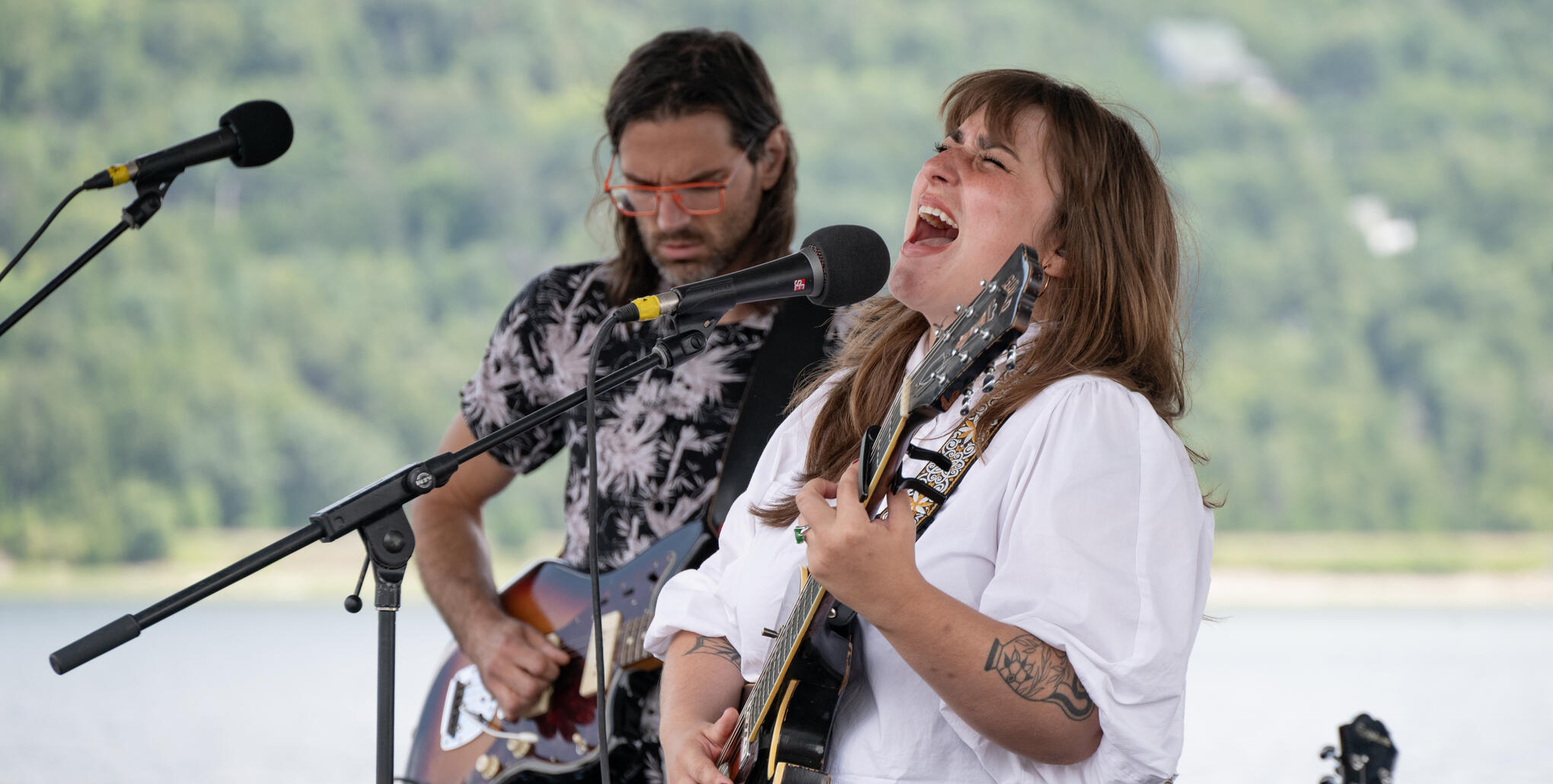
Elisapie (Inuk) for sure! Her most recent album, Inuktitut, is, for Indigenous people, an album that pulses with nostalgia for the lives we led in our communities. How many times, whatever our Nation, have we heard singers from home translate the biggest, most popular songs of our lives into our languages? Elisapie succeeded in doing this for us! So, I cherish this album, enormously. Jeremy Dutcher (Wolastoqey), with his Wolastiqiyik Lintowakonawa, and Motewolonuwok albums, taking us back to the strong presence rooted in our respective cultures. He often reminds us that we can’t forget the voices of the ancestors when we create something. And, from home, there’s Kashtin (Innu), whose albums were recently added to the major online music platforms. Not to mention the group Maten, writer-composer-performer Scott Pien-Picard and writer-composer-singer-performer Kanen, both from Maliotenam. And finally, go find the electronic music of two major women from the Inuit nations of Canada and Greenland: Riit (Inuk) and Varna (Inuk, Kalaallit Nunaat). Basically, that’s my playlist! (When I’m not listening to Bad Bunny, Lady Gaga, Karol G and Shakira!) [laughs ]
Nipukuenitan iteian nte Festif!

Le Festif! de Baie-Saint-Paul: Towards Gender Balance!
We wanted to hear directly from Executive Director Clément Turgeon, in regards to male/female gender balance, and with respect to the representation of Indigenous performers on the program: "At Festif!, gender balance and diversity are not just goals, but ways of thinking about the program. I actively look to spotlight performers from diverse backgrounds, so that the festival reflects the richness and multiplicity of the music scene today. Gender balance has been something we've considered for a few years now and is expressed in concrete terms, in my artistic choices. We also pay particularly attention to ensuring the presence of Indigenous performers, by working to provide them a full presence and visible position on the program. The idea is not to hit a quota, but to create a more open and representative event."